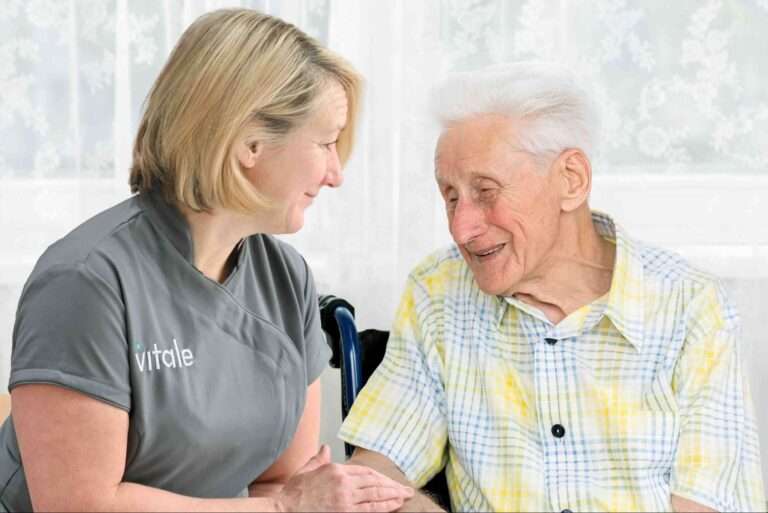
Muscle weakness and atrophy can be formidable challenges for people recovering from a stroke, managing Parkinson’s disease, or facing the natural effects of ageing. Vitale Care Professionals can help.
Vitale is committed to improving the well-being of those we support.
Clinical Nurse Jo Morgan at Vitale explains, “Part of our approach is to look at ways to address these issues proactively. We understand the causes of muscle weakness and atrophy in stroke, Parkinson’s, and old age and can support our clients with light exercises.”
A stroke disrupts blood flow to the brain and damages brain cells.
This can cause muscle weakness or paralysis on one side of the body, which doctors refer to as hemiparesis. The lack of neural signals to the affected muscles can cause disuse atrophy, weakening the muscles due to inactivity.
Parkinson’s is a neurodegenerative disorder that affects movement. As the disease progresses, muscle stiffness and tremors may occur, decreasing individuals’ physical activity. This reduced mobility can contribute to muscle weakness and atrophy over time.
Why do we get weaker as we age?
Ageing itself can cause muscle atrophy, a process called sarcopenia. Hormonal changes, decreased physical activity, and a decline in muscle mass weaken muscles, making older individuals more susceptible to falls and fractures.
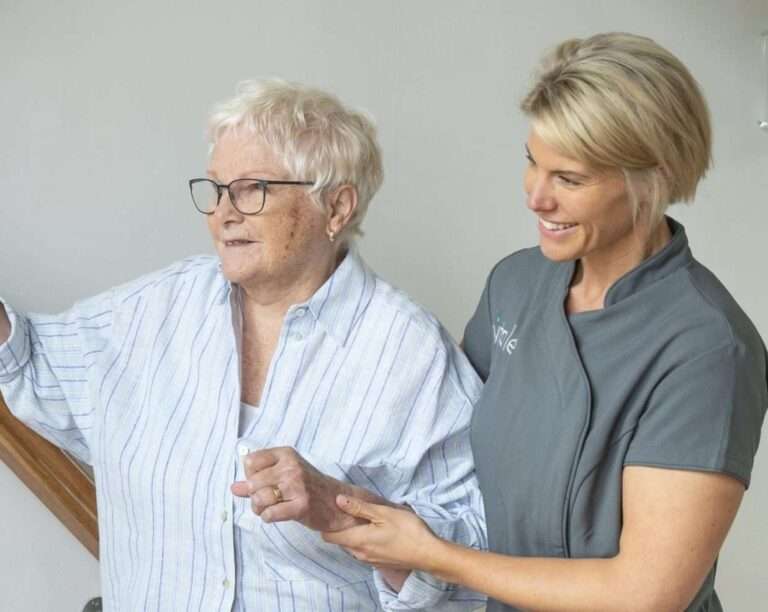
Vitale partners with our client’s occupational therapist and physiotherapy teams to help with at-home exercise regimes.
Vitale’s Community Engagement Officer Charli Milne is also a fully trained massage sport and remedial massage therapist. She explained, ‘We offer support with light exercises, including wheelchair-friendly options, to counter these challenges. As part of our community engagement, we run free dexterity, balance and movement classes, everyone is welcome!”
Countering Muscle Weakness and Atrophy through Exercise
Range of Motion Exercises:
For people recovering from a stroke or managing Parkinson’s, simple range of motion exercises can make a significant difference. Gentle stretches and joint movements help maintain flexibility, prevent contractures, and improve blood circulation. These exercises can be adapted for individuals in wheelchairs, focusing on upper body movements.
Resistance Training:
Light resistance training is crucial for rebuilding muscle strength. This can include using resistance bands, light weights, or even water resistance in aquatic therapy. For wheelchair users, resistance exercises can target the upper body, such as arm lifts and shoulder rotations.
Seated Aerobics:
Engaging in seated aerobic exercises is an excellent way to elevate heart rate and improve cardiovascular health without putting excessive strain on joints. Wheelchair users can benefit from activities like seated leg lifts, seated marches, and seated torso twists to enhance circulation and muscle engagement.
Balance and Stability Exercises:
For older people, balance and stability exercises are essential for preventing falls. Simple exercises like heel-to-toe walking, single-leg stands, and seated stability exercises can be incorporated into daily routines.
Adaptive Yoga and Pilates:
Adapted yoga and pilates routines can offer a holistic approach to muscle strengthening, balance improvement, and stress reduction. These activities can be modified for individuals with varying levels of mobility and are particularly beneficial for wheelchair users.
Incorporating light exercises adapted to your capabilities, and approved by OT and physiotherapy teams, can contribute significantly to rebuilding strength, enhancing mobility, and improving overall well-being. A Care Professional by your side can motivate, encourage, and instil the confidence you need to build this into your daily routine.
If you or a loved one is looking for at-home care that helps you live the life you love, contact us.
For more information contact:
Stroke Association
Parkinson’s UK